
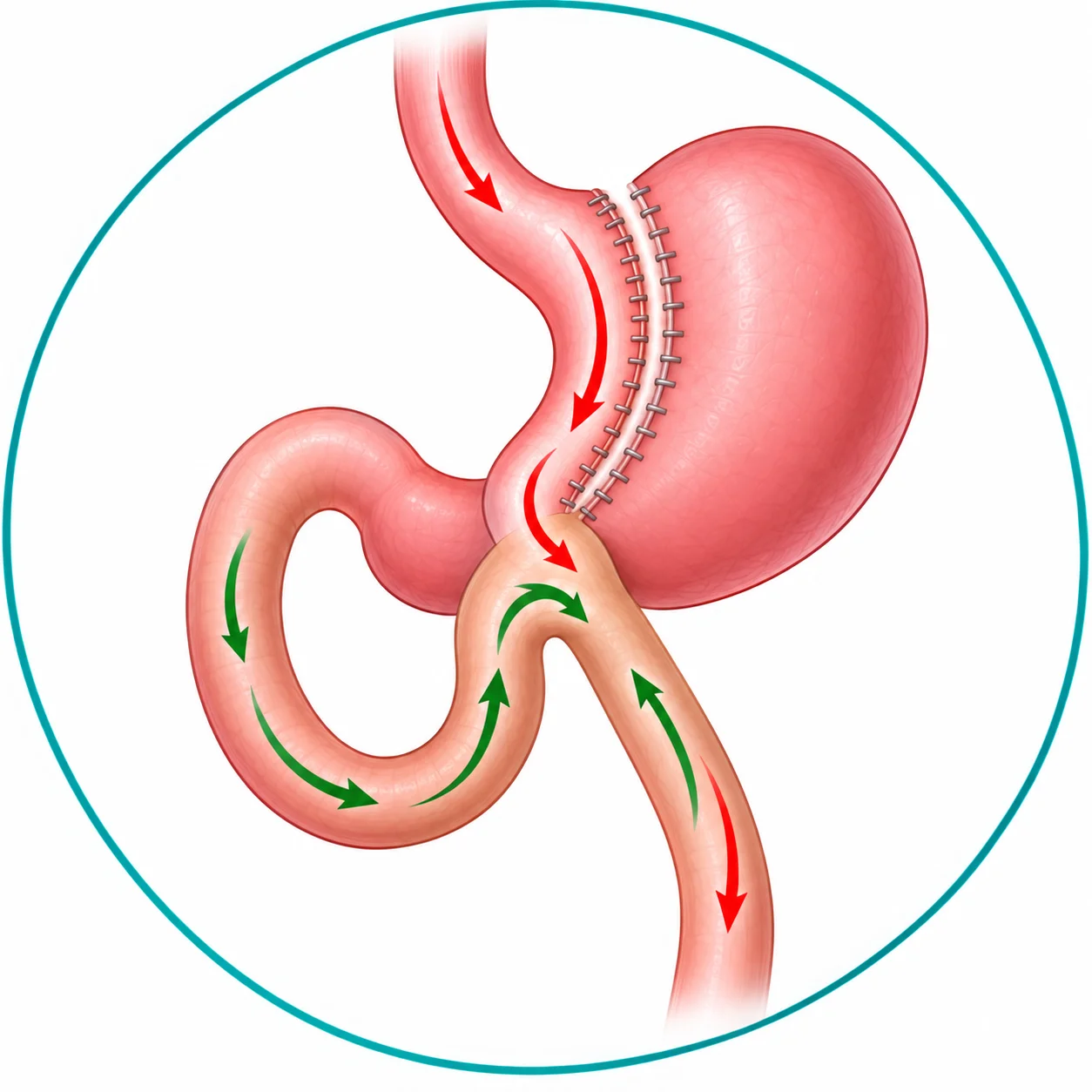
Mini Gastric Bypass, also known as One-Anastomosis Gastric Bypass (OAGB), creates a long, narrow stomach pouch that is connected directly to the small intestine using a single surgical connection. This changes both the amount of food that can be eaten and the way nutrients are absorbed, supporting significant and sustained weight loss.
Learn more about procedure options, preparing for surgery, recovery, safety and long-term care.
Compare the anatomical and practical differences between major procedures.
Understand the important steps patients may take before surgery.
See what recovery may involve from the first hours to later stages.
Understand surgical risks, complications and follow-up considerations.
Learn why regain may occur and the options that may be considered.
Mini Gastric Bypass uses one intestinal connection, whereas Roux-en-Y Gastric Bypass uses two.
The exact duration varies according to the patient and surgical findings, but Mini Gastric Bypass is generally considered technically simpler than Roux-en-Y because it uses a single anastomosis.
Yes. Long-term nutritional monitoring and vitamin or mineral supplementation may be required after gastric bypass procedures.
Online information can help you understand your options, but the right treatment depends on your individual health, medical history and goals.
WhatsApp us