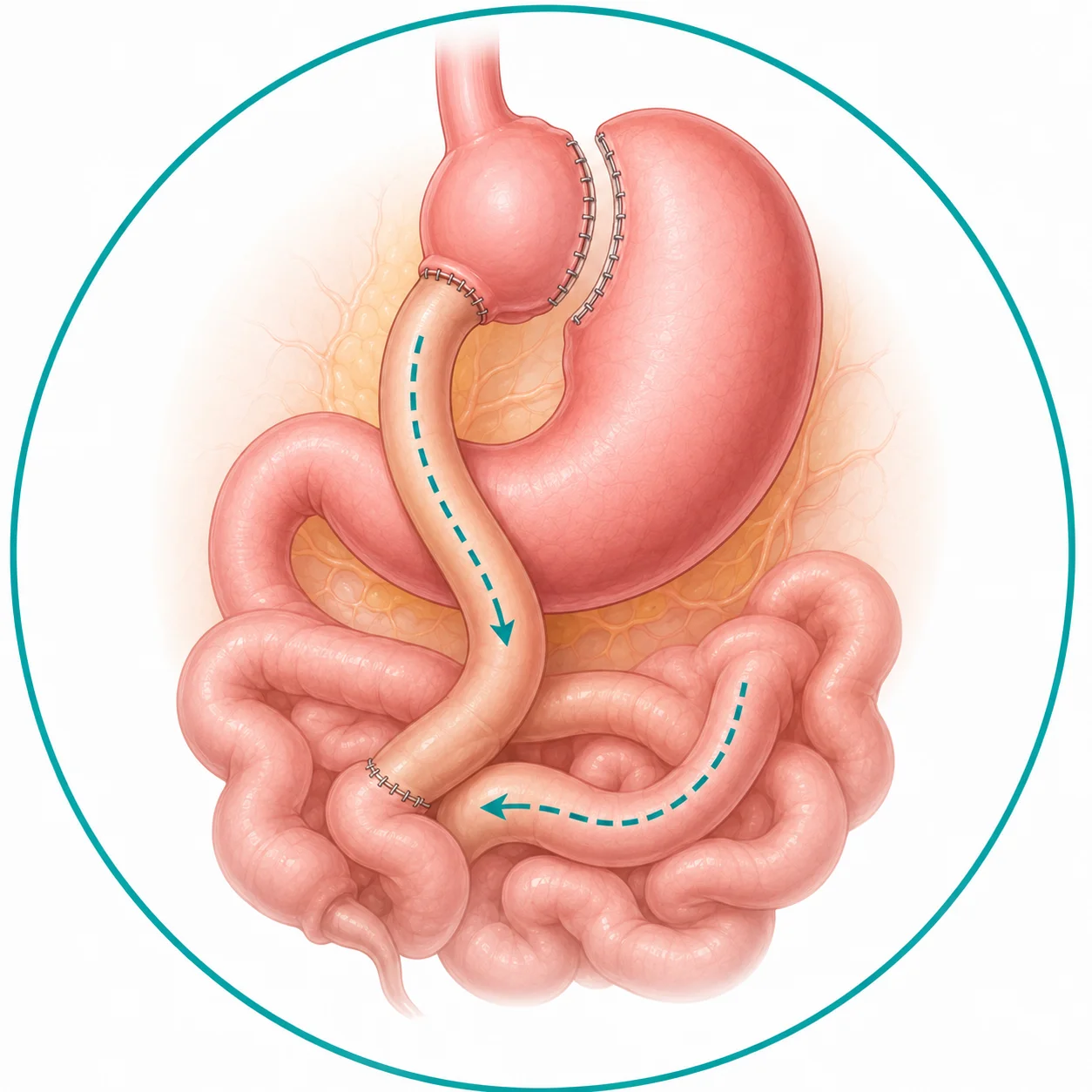
Roux-en-Y Gastric Bypass creates a small stomach pouch and connects it to a lower section of the small intestine. A second intestinal connection completes the new digestive pathway, allowing food to bypass part of the stomach and upper small intestine. This reduces food intake and changes digestion and metabolic signalling to support long-term weight loss.
Explore procedure comparisons, preparation, recovery, safety and the relationship between bariatric surgery and Type 2 diabetes.
Compare the three major bariatric procedures and their key differences.
Learn about pre-operative tests, medication review and hospital preparation.
Understand what patients may expect during recovery after surgery.
Learn about potential risks and how surgical teams work to reduce them.
Understand how bariatric surgery may affect diabetes control in appropriate patients.
Roux-en-Y Gastric Bypass involves two intestinal connections, creating the characteristic Roux-en-Y digestive pathway.
It is one of the most extensively studied bariatric procedures and has demonstrated substantial, durable weight loss beyond 10 years in long-term studies.
Yes. Lifelong nutritional monitoring and appropriate vitamin and mineral supplementation are important because the procedure changes nutrient absorption.
It is commonly considered a strong bariatric option for patients with obesity who also have significant reflux, although the appropriate procedure should be selected after surgical assessment.
Online information can help you understand your options, but the right treatment depends on your individual health, medical history and goals.
WhatsApp us